Used V Blenders for Sale 12


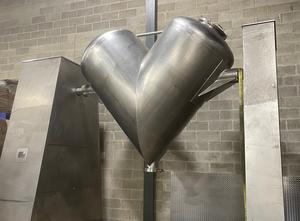
V blenders (V-shaped tumble blenders, also called V cone blenders) blend dry powders through tumbling action as the V-shaped vessel rotates. The V geometry — two cylindrical vessels joined at the bottom in a V configuration — provides gentle but effective mixing through repeated folding and recombination of the powder mass as the vessel rotates around its central axis. The technology suits applications where mechanical agitation could damage product particles, where heat-sensitive products require gentle mixing, or where batch contamination control matters more than mixing intensity.

Used V blenders on Exapro narrow the powder blender category for V-shaped tumble blender equipment, distinct from ribbon blenders, high-shear mixers, and other powder mixer types. Filter by working volume, materials of construction, intensifier bar capability, and pharmaceutical validation level. Submit an enquiry through the listing page on Exapro.

V blender vs alternative powder mixers

Powder mixing technologies differ in mixing mechanism, intensity, gentleness, and application suitability. V blenders provide gentle mixing through gravity-driven tumbling without mechanical agitation that could damage friable particles or generate heat through shear.

Ribbon blenders use mechanical helical ribbons rotating in horizontal troughs to actively move material in counter-flowing patterns. The mechanical agitation produces faster mixing than V blenders but with greater mechanical action on the product. Ribbon blenders suit applications where mixing speed and intensity matter; V blenders suit applications where product gentleness matters more than mixing speed.

High-shear mixers add intense mechanical shear to powder mixing — appropriate for difficult formulations requiring agglomerate breakdown but inappropriate for friable or heat-sensitive products.

Double-cone blenders provide alternative tumble blending geometry with similar gentleness characteristics to V blenders. The double-cone geometry produces slightly different tumbling patterns; the V geometry has become more common in pharmaceutical applications.

Pharmaceutical formulation blending applications

Pharmaceutical formulation blending represents the primary V blender application area globally. Active pharmaceutical ingredient (API) mixing with excipients (binders, fillers, lubricants, disintegrants) produces homogeneous powder blends that subsequent tablet pressing or capsule filling require. The blend uniformity and homogeneity directly affect dose consistency in finished pharmaceutical products.

Pharmaceutical regulatory requirements demand blend uniformity validation. Cleanroom GMP compliance, validation documentation, and equipment qualification (installation, operation, performance) apply to pharmaceutical V blenders. Used V blenders without comprehensive validation documentation require substantial requalification effort at the buyer's facility.

Cleanability is critical for pharmaceutical applications where cross-contamination must be eliminated between products. V blender cleanable design includes mirror-polished interior surfaces (Ra 0.4 micrometres or better), minimal product retention areas, and CIP (clean-in-place) capability for automated cleaning.

Intensifier bars

Intensifier bars (auxiliary mixers within the blender) provide additional mixing action for difficult blends — products with cohesive ingredients, ingredients with significantly different particle sizes, or ingredients with widely different concentrations (where high-dilution mixing is required). The intensifier bar rotates at higher speed than the main vessel, providing localised intense mixing that supplements the bulk tumbling action.

Intensifier bar capability extends V blender application range to formulations that V blender alone could not effectively process.

Capacity and configurations

Working volume specifications cover laboratory development through commercial production. Laboratory V blenders (5-30 litre nominal capacity) handle formulation development. Pilot scale V blenders (100-300 litre nominal capacity) cover clinical trial production. Commercial production V blenders (500-5,000+ litre nominal capacity) handle commercial pharmaceutical manufacturing.

V blenders typically operate at 50-65% fill level for optimal mixing — exceeding this fill level reduces mixing effectiveness as the powder volume restricts the tumbling action. The nominal blender capacity should be selected to provide the actual working volume your batches require.

Major manufacturers

Leading V blender manufacturers include Bohle (German pharmaceutical specialist), Glatt (within their broader pharmaceutical equipment range), Patterson Kelley (US, with the original V blender heritage), IBC Tote (US), GEA Pharma Systems, and various pharmaceutical equipment specialists serving regional markets.

Browse used V blenders on Exapro to compare laboratory through commercial scale configurations from verified sellers worldwide. When evaluating used V blenders, verify interior surface condition and finish quality, check rotary drive system condition and seal integrity, inspect intensifier bar function if equipped, test mixing performance through blend uniformity testing on representative materials, confirm CIP system function for cleaning validation, validate validation documentation completeness for pharmaceutical use, and verify that capacity, materials of construction, and validation documentation match your intended applications.