Used Textile Printing Machines for Sale 6


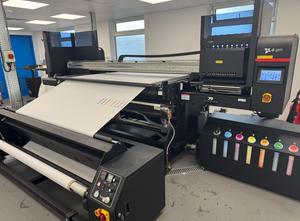
Textile printing machines apply patterns and colours to fabrics through digital inkjet, rotary screen, or flatbed technologies. Digital printing eliminates screen preparation costs, making short runs and sampling economically viable. Single-pass digital printers approach rotary screen speeds for production work. Ink type — reactive, acid, disperse, or pigment — must match the fabric substrate for colour fastness and hand-feel requirements.

Used textile printing machines on Exapro serve fashion, home textile, and industrial fabric producers. Filter by printing technology, print width, and ink type compatibility. Submit an enquiry through the listing page for details.

Digital textile printing has transformed the textile decoration industry by eliminating the screens, colour separations, paste preparation, and washoff processes that traditional rotary screen printing requires. This makes digital printing economically viable for short production runs, sampling, seasonal collections, and personalised products where traditional screen printing setup costs would be prohibitive.

Single-pass digital printers achieve production speeds approaching those of rotary screen printing by placing multiple print head arrays across the full fabric width, depositing all colours simultaneously as the fabric passes beneath the heads in a single traversal. These machines represent the highest capital investment in digital textile printing but deliver the lowest per-metre cost at production volumes.

Scanning or multi-pass digital printers move a carriage of print heads back and forth across the fabric width, building up the image in successive passes. They offer substantially lower capital cost than single-pass machines but with correspondingly lower throughput, making them well-suited to sampling, strike-off production, short runs, and speciality printing where speed is less critical than flexibility and colour range.

Ink type must match both the fabric substrate chemistry and the end-use performance requirements of the printed textile. Reactive inks for cotton and cellulosic fibres require steaming and washing for fixation. Acid inks for silk, wool, and nylon provide brilliant colours on protein and polyamide fibres. Disperse inks for polyester work either through direct printing with subsequent heat fixation or through sublimation transfer from paper. Pigment inks work across multiple substrates with simpler fixation but different hand-feel characteristics.

Print head condition is the primary cost driver on used digital textile printers. Industrial print heads have a finite lifespan measured in billions of firing cycles, and replacement costs for a full set of heads across all colour channels can represent a substantial proportion of the machine's total used market value. Request head firing data and nozzle check prints showing all active nozzles before committing to purchase.

When evaluating used textile printing machines on Exapro, request current nozzle check prints from every head position and colour channel, verify ink supply system condition including pumps, filters, and degassing components, check the fabric transport mechanism for consistent feed speed without wrinkles, skewing, or tension variation, and confirm ink type compatibility with your target fabric substrates and end-use requirements.