Showing 1 - 20 out of 200

| Distance between uprights | 5050 mm |
|---|---|
| Vertical stroke | 300 mm |
| Throat | 400 mm |
|---|

| Strength | 165 T |
|---|---|
| Distance between uprights | 3150 mm |
| Throat | 250 mm |
| Working speed | 9 mm/s |
| Folding length | 4100 mm |
|---|---|
| CNC | cnc touchscreen control |
| Vertical stroke | 175 mm |
| Engine Power | 11.18568 kW |

| Strength | 110 T |
|---|---|
| Distance between uprights | 3600 mm |
| Throat | 250 mm |
| Working speed | 11 mm/s |
| Folding length | 4100 mm |
|---|---|
| CNC | |
| Vertical stroke | 130 mm |
| Engine Power | 11.4 kW |

 Belgium
| Strength | 135 T |
|---|---|
| Distance between uprights | 2600 mm |
| Vertical stroke | 250 mm |
| Folding length | 3150 mm |
|---|---|
| Throat | 400 mm |
| Engine Power | 15 kW |
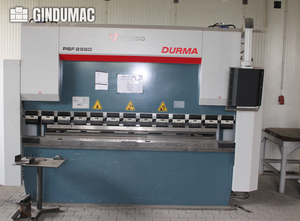
 Hungary
2019
| Strength | 60 T |
|---|---|
| Distance between uprights | 2150 mm |
| Throat | 250 mm |
| Axis number | 3 |
| Folding length | 2550 mm |
|---|---|
| CNC | Dt-10 |
| Vertical stroke | 160 mm |
| Engine Power | 5.5 kW |
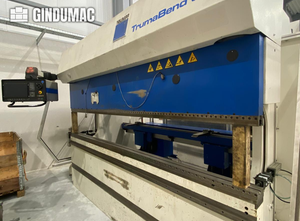
Belgium
1998
| Strength | 130 T |
|---|---|
| CNC | |
| Axis number | 4 |
| Folding length | 3000 mm |
|---|---|
| Vertical stroke | 215 mm |
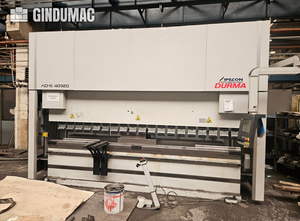
 Slovakia
2024
| Strength | 320 T |
|---|---|
| Distance between uprights | 3600 mm |
| Throat | 200 mm |
| Working speed | 200 mm/s |
| Engine Power | 37 kW |
| Folding length | 4050 mm |
|---|---|
| CNC | Yes |
| Vertical stroke | 365 mm |
| Axis number | 4 |
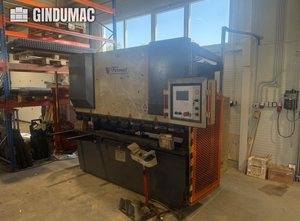
 Czech Republic
2006
| Strength | 80 T |
|---|---|
| CNC | Yes |
| Folding length | 2500 mm |
|---|---|
| Axis number | 3 |
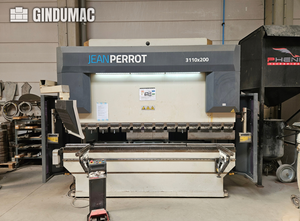
 France
2018
| Strength | 200 T |
|---|---|
| Distance between uprights | mm |
| Throat | mm |
| Working speed | mm/s |
| Engine Power | 15.3 kW |
| Folding length | 3100 mm |
|---|---|
| CNC | |
| Vertical stroke | 260 mm |
| Axis number | |
| Hole |


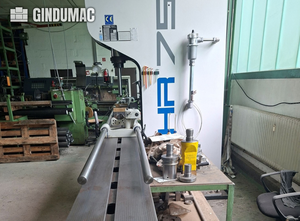
 Germany
2018
| Strength | T |
|---|---|
| Distance between uprights | mm |
| Throat | 250 mm |
| Working speed | 68 mm/s |
| Engine Power | 7.5 kW |
| Folding length | mm |
|---|---|
| CNC | |
| Vertical stroke | 160 mm |
| Axis number | |
| Hole |

 Austria
2026
| Strength | 220 T |
|---|---|
| Distance between uprights | 3600 mm |
| Throat | 410 mm |
| Working speed | 10 mm/s |
| Engine Power | 22 kW |
| Folding length | 4050 mm |
|---|---|
| CNC | DT15 |
| Vertical stroke | 265 mm |
| Axis number | 3 |

 Italy
2019
| Strength | T |
|---|---|
| Distance between uprights | 1000 mm |
| Throat | 150 mm |
| Working speed | 10 mm/s |
| Engine Power | 4 kW |
| Folding length | 1250 mm |
|---|---|
| CNC | |
| Vertical stroke | 180 mm |
| Axis number | |
| Hole |

Germany
2001
| Strength | T |
|---|---|
| Distance between uprights | 2600 mm |
| Throat | 300 mm |
| Working speed | 9.8 mm/s |
| Engine Power | 11 kW |
| Folding length | 3100 mm |
|---|---|
| CNC | |
| Vertical stroke | 215 mm |
| Axis number | |
| Hole |

 Spain
2021
| Strength | 630 T |
|---|---|
| Distance between uprights | 1600 mm |
| Throat | 320 mm |
| Working speed | 8 mm/s |
| Engine Power | 5.5 kW |
| Folding length | 1300 mm |
|---|---|
| CNC | delem da53t |
| Vertical stroke | 100 mm |
| Axis number | 3 |

Germany
2013
| Strength | 135 T |
|---|---|
| Distance between uprights | 2600 mm |
| Throat | 400 mm |
| Working speed | 10 mm/s |
| Engine Power | 11 kW |
| Folding length | 3100 mm |
|---|---|
| CNC | DELEM DA-66T CNC |
| Vertical stroke | 200 mm |
| Axis number | 6 |

| Strength | 130 T |
|---|---|
| Distance between uprights | 2690 mm |
| Throat | 410 mm |
| Axis number | 4 |
| Folding length | 3060 mm |
|---|---|
| CNC | |
| Working speed | 10 mm/s |
| Engine Power | 18.7 kW |

 Poland
2021
| Strength | 60 T |
|---|---|
| Distance between uprights | 1600 mm |
| Throat | 410 mm |
| Working speed | mm/s |
| Engine Power | kW |
| Folding length | 2100 mm |
|---|---|
| CNC | |
| Vertical stroke | 210 mm |
| Axis number | |
| Hole |

Poland
2021
| Strength | T |
|---|---|
| Distance between uprights | 1070 mm |
| Throat | 410 mm |
| Working speed | mm/s |
| Engine Power | kW |
| Folding length | 1250 mm |
|---|---|
| CNC | |
| Vertical stroke | 215 mm |
| Axis number | |
| Hole |

Hungary
2006
| Strength | T |
|---|---|
| Distance between uprights | mm |
| Throat | mm |
| Working speed | 100 mm/s |
| Engine Power | 22 kW |
| Folding length | 3100 mm |
|---|---|
| CNC | |
| Vertical stroke | mm |
| Axis number | |
| Hole |

Belgium
1999
| Strength | T |
|---|---|
| Distance between uprights | mm |
| Throat | mm |
| Working speed | mm/s |
| Engine Power | kW |
| Folding length | mm |
|---|---|
| CNC | |
| Vertical stroke | mm |
| Axis number | |
| Hole |

 EN
- Languages
 English (GB)
 English (US)
 Français
 Čeština
 Español
 Deutsch
 Italiano
 Polski
 Русский
 Türkçe
 Português
 Magyar
 Hrvatski
 Български
 Nederlands
 Ελληνικά
 Dansk
 Svenska
 Română
 Crpski
 Lietuvių